
Different Types of Koi Fish: A Guide to Popular Varieties and Patterns
 Koi ponds attract attention because of the incredible range of colors and patterns these fish display. Understanding the different types of koi fish helps pond owners choose varieties that suit their taste, pond size, and long-term goals. Koi are not just colorful fish; breeders classify them into specific groups based on color, pattern, and scale type. These categories make it easier to identify koi and appreciate their quality.
Koi originated from selectively bred carp, and over generations, breeders refined distinct traits. Today, koi varieties range from simple and elegant to bold and dramatic, each offering something unique to a pond.
Different Types of Koi Fish: The Main Categories
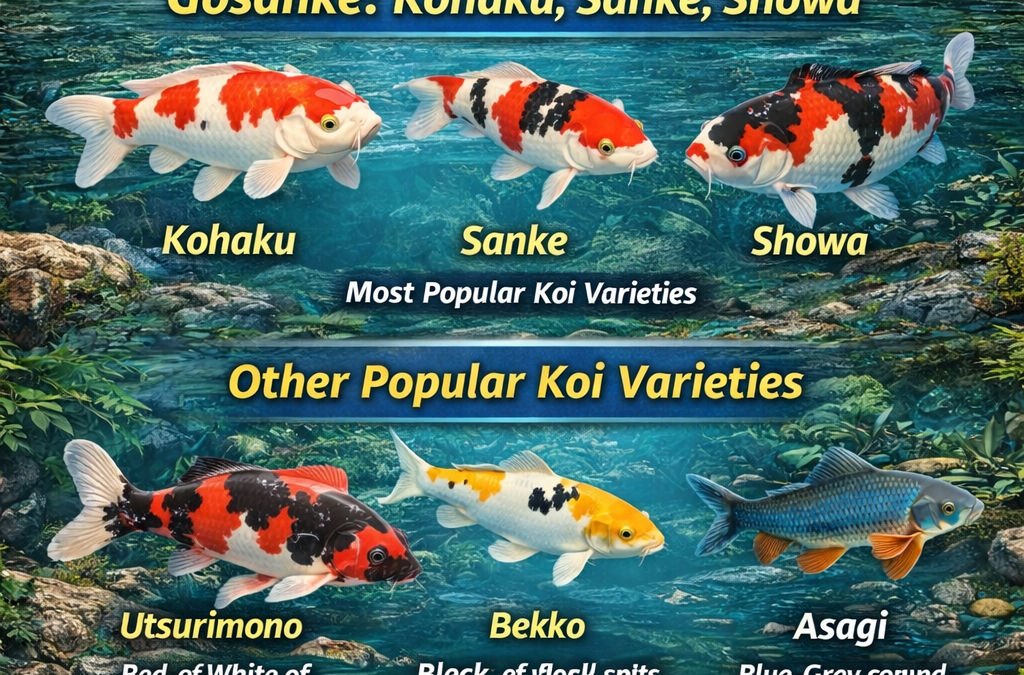
When exploring the different types of koi fish, most varieties fall into well-known classifications. One of the most famous groups is Gosanke, which includes Kohaku, Sanke, and Showa. These koi form the foundation of modern koi keeping and remain the most popular worldwide.
Kohaku feature a white body with red patterns and represent simplicity and balance. Sanke build on this look by adding black markings, while Showa display a black base with red and white layered on top, creating a bold appearance.
Other Popular Koi Varieties
Beyond Gosanke, many other koi types add diversity to ponds:
-
Utsurimono: Black-based koi with red, white, or yellow patterns.
-
Bekko: Solid-colored koi with black spots, offering a cleaner, minimalist look.
-
Asagi: Blue-grey koi with a net-like scale pattern and red accents on the belly and fins.
-
Shusui: A scaleless version of Asagi with a striking row of scales along the dorsal line.
-
Ogon: Metallic koi with a single solid color, such as gold or platinum, known for their shine.
-
Butterfly Koi: Long-finned koi that create graceful movement in the water, although they are not always accepted in traditional koi shows.
Why Variety Matters in a Koi Pond
Choosing from the different types of koi fish allows you to create visual contrast and balance in your pond. Mixing bold patterns with solid-colored koi enhances depth and movement. Variety also helps beginners learn how koi develop over time, as some patterns change dramatically as fish mature.
Final Thoughts
Koi varieties offer endless combinations of color, pattern, and personality. By understanding the different types of koi fish, pond keepers can make informed choices, build visually stunning ponds, and appreciate the artistry behind centuries of selective breeding.