

How Many Koi Should You Have in Your Pond? A Practical Stocking Guide
One of the most common questions new and experienced pond keepers ask is how many koi should you have in your pond. Stocking the correct number of koi directly affects water quality, fish health, growth rate, and long-term pond enjoyment. Overstocking leads to poor water conditions, stressed fish, and constant maintenance problems, while correct stocking creates a balanced, healthy pond where koi thrive.
How Many Koi Should You Have in Your Pond? Start With Surface Area
To determine how many koi should you have in your pond, you must first measure the pond’s surface area. Surface area plays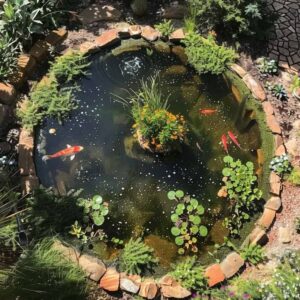 a major role in oxygen exchange and waste dilution.
To calculate the surface area, simply multiply the length by the width:
Length × Width = m² surface area
For example, a pond that is 3 meters wide and 6 meters long has a surface area of:
3m × 6m = 18m²
When introducing fish into a new pond, allow a maximum of 25 cm of fish per square meter. This means an 18m² pond can safely hold a total of 450 cm of fish length during the early stages.
Stocking Levels in Mature Koi Ponds
Once a pond matures—usually after about three years—you can gradually increase the stocking level. At this stage, you may allow up to 50 cm (or 2 inches) of fish per square meter, provided the pond has excellent filtration and water quality.
Never add large quantities of koi at the same time. Always stock gradually and plan for the adult size of the fish, not their size at purchase. Koi grow fast, and many first-time enthusiasts underestimate how quickly overcrowding occurs.
Water Quality and Equipment Matter
These stocking guidelines assume a healthy, well-maintained pond. Water must have very low ammonia levels, supported by strong mechanical and biological filtration and effective UV lights. In South Africa, higher water temperatures place extra strain on ponds, so you should always double up on the suggested filtration and equipment capacity compared to European recommendations.
Some sources suggest one koi per 1,000 liters, while others recommend one koi per 2,000 liters. The safer and more responsible option is one koi per 2,000 liters.
A Real-World Warning
I have seen a 15,000-liter pond holding thirty koi over 500 mm in size. It was a disaster. The pond should have had no more than seven koi. Even with daily water changes of 10%, the water remained murky and foul-smelling, and the koi showed clear signs of stress. In situations like this, selling some fish—even when emotionally difficult—becomes the healthiest choice.
Final Advice
The biggest mistake new koi keepers make is buying too many small koi. They grow quickly, and within months the pond becomes overcrowded. If you plan carefully and stock responsibly, you will enjoy healthier koi, clearer water, and a pond that stays balanced for years to come.