
Koi Fish: History, Colors, and Fascinating Facts
Koi are among the most admired ornamental pond fish in the world, valued for their beauty, calm behavior, and symbolism. Understanding koi fish history helps explain where these remarkable fish came from, how they developed their vivid colors, and why they thrive in so many pond environments today. Koi do not only add visual impact to ponds; they also carry centuries of careful breeding and cultural importance.
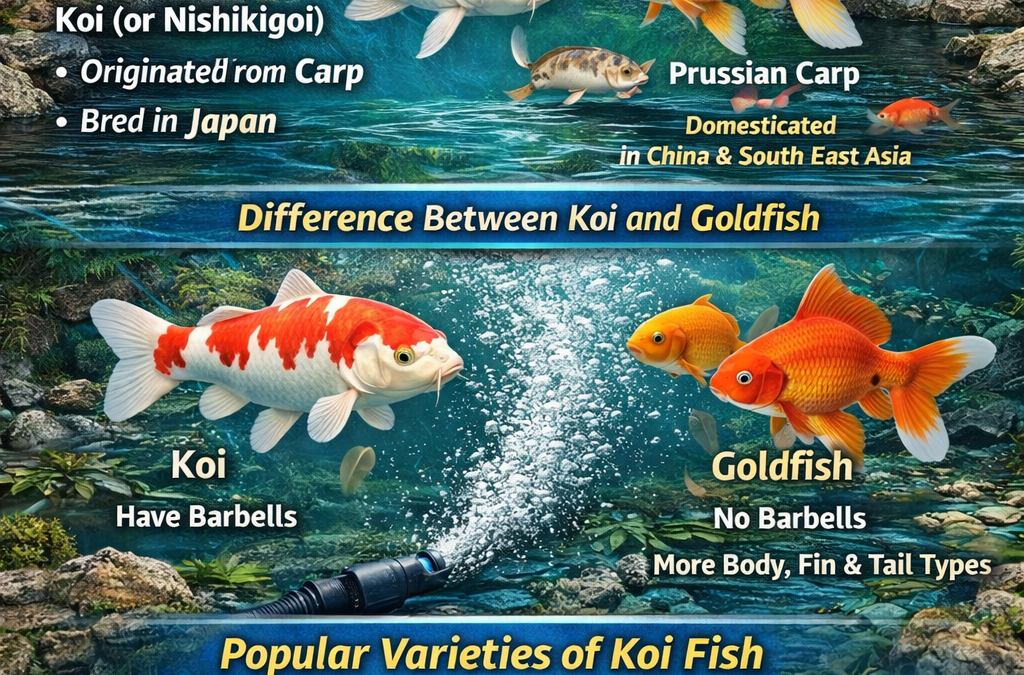
Koi, also known as nishikigoi, are decorative varieties of the common carp. Breeders developed them for their striking colors and patterns rather than for food. Over time, koi became living works of art and a centerpiece of garden ponds across the globe.
Koi Fish History and Origins
 The story of koi fish history begins in Asia and Central Europe, where common carp naturally existed. People domesticated carp in China and Southeast Asia, selecting fish that adapted easily to different water conditions. This adaptability allowed carp to spread throughout Japan, where selective breeding reached an advanced level.
Japanese rice farmers noticed unusual color mutations in carp and began breeding them intentionally. These efforts refined colors and patterns over generations. Koi survived and spread across Japan because they adapted well to varying climates and water quality. By the 19th century, breeders focused exclusively on ornamental traits, creating the koi varieties we recognize today.
During this time, specialized breeding of Prussian carp led to the development of goldfish. Goldfish first appeared in Japan in the 16th century and later reached Europe in the 17th century, following a separate breeding path from koi.
How Koi Got Their Colors
Koi colors developed through selective breeding of natural pigment mutations. Red, orange, yellow, black, blue, and white pigments strengthened over time as breeders selected the most vibrant fish. Diet, water quality, and sunlight now play a major role in maintaining strong color intensity in modern koi ponds.
The Difference Between Koi and Goldfish
Koi and goldfish come from different carp species. Although they can breed, their offspring are sterile. Koi have visible barbells on their lips, while goldfish do not. Goldfish also remain smaller and show more variation in body shape, fins, and tails.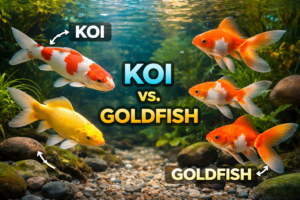
Varieties of Koi Fish
Koi display countless color and pattern combinations. The most common colors include white, black, red, yellow, blue, and cream. Breeders classify koi into named categories, with Gosanke being the most popular group. These classifications help pond keepers identify and appreciate koi types more easily.
Koi continue to fascinate enthusiasts worldwide, combining history, adaptability, and living color into one extraordinary fish.